Jouty
Jouty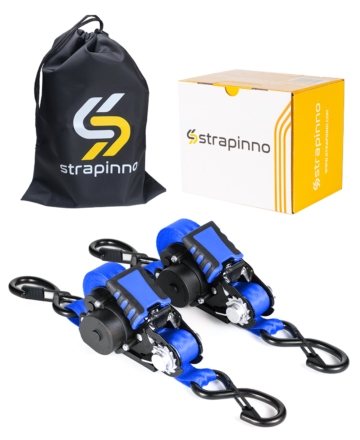
Strapinno Retractable Ratchet Straps — Built to Move Safer, Happier
Loading a truck or backing a trailer down a ramp shouldn’t feel like a wrestling match with twisted webbing. Strapinno rethinks the entire tie-down workflow with gear designed to be faster to set up, simpler to release, and tidy to store. Instead of long, loose tails and slow buckle threading, you get a compact housing that feeds out the length you need, tensions with familiar ratchet clicks, and retracts smoothly when you’re done. The end result is less clutter, fewer mistakes, and a more confident haul—every time.
From the home page’s clear “It’s Retractable!” message to the dedicated Technology section and product line pages, the theme is consistent: make securement intuitive. Big visuals demonstrate how the straps deploy and rewind. Product tiles group the line by Outdoor, Marine, Transport, and All Products. There’s a Videos & Tutorials area for hands-on learning, a Gallery to see real-world setups, and a straight-to-the-point Our Mentality note that sums up the brand promise: everything should go as planned.
Why This Design Wins: Less Friction, More Safety
Traditional straps can be effective—but slow. You dig out a bundle, untangle twists, thread a tail through a slot, crank the ratchet, then figure out where to stash a yard of extra webbing. Every extra step is an opportunity for user error or skipped safety checks. Strapinno’s design removes hassles that cause shortcuts:
- Self-retracting webbing keeps straps organized and ready.
- Simple, consistent motions—pull, ratchet, release—reduce guesswork.
- Safety-forward hardware—latches and clips—keeps hooks seated.
- Permanent options—two-way and bolt-on dual-lock—streamline repeat tasks.
When the correct method is also the fastest method, you use it right more often. That’s the quiet power behind retractable ratchet straps in day-to-day life.
Inside the System: The Technology At Work
The Technology page breaks the experience into the motions you perform on every job.
The Pull
Extend only what you need. The webbing feeds smoothly from the housing without tangling or bird-nesting. You’re not dragging a dirty tail across the bed or fiddling with knots.
The Release
At the end of the job, a straightforward release lets the strap retract cleanly back into the body. No hand-rolling wet or muddy webbing; no searching for elastic keepers.
The Safety Latch
A small part with big value. The latch helps keep the hook captured on the anchor point, adding security if tension momentarily dips—think potholes, ramps, or suspension compression.
S-Hook with Clip
Where shown, the S-hook includes a clip that closes the hook’s mouth around the anchor. That means you can let go to reposition or fetch another strap without losing your connection.
Two-Way & Bolt-On
For frequent trailering or tight spaces, the Two-Way option gives flexible operation, while the Bolt-On Dual-Lock mounts to your trailer for a permanent, repeatable routine—ideal for transom tie-downs.
The Weight Limit: Read It, Respect It, Choose Correctly
Strapinno product cards make load ratings plain:
- Easy Retractable — Working Load Limit 500 lbs, Breaking Strength 1,500 lbs.
- Two-Way Retractable — Working Load Limit 1,000 lbs, Breaking Strength 3,000 lbs.
- Dual Lock Bolt-On — Working Load Limit 866 lbs, Breaking Strength 2,600 lbs.
Match the WLL to your cargo, and remember that using multiple straps—crossed where appropriate—controls movement better than over-tightening a single line.
Product Line Overview: Choose by Job, Not Guesswork
Outdoor (Everyday Duty)
The Easy Retractable sets are the “always in the truck” choice. They deploy in seconds for coolers, tools, totes, ladders, small furniture, and DIY store runs. The auto-retract housing keeps the rest of your cargo area uncluttered.
Transport (Bigger Loads, More Flex)
Step up to Two-Way when you need more WLL and faster handling around trailers, ATVs, generators, or mowers. Operating from either side is a real advantage in tight alleys, crowded job sites, and storage lots.
Marine (Permanent, Repeatable, Ramp-Ready)
The Bolt-On Dual-Lock transom bundles are built for boat and PWC trailers. They live on the trailer, cut the launch routine to a few simple moves, and lock down for the highway home. Rinse, park, repeat.
All Products (Full Catalog)
If you’re kitting out multiple vehicles or a small fleet, scan the complete lineup to mix portable 4-packs with dedicated bolt-on units. Different jobs, one consistent mechanism.
Retractable Ratchet Straps (What They Are & Why They Matter)
Retractable ratchet straps store their own webbing. Instead of coiling a long tail by hand, you extend the length you need, tension with the ratchet, and—when you hit release—the strap rewinds into its housing. The benefits stack up:
- Speed: Less time fighting tangles equals quicker loading and unloading.
- Cleanliness: Webbing isn’t dragged across concrete, gravel, or salt.
- Consistency: Fewer steps, fewer opportunities to mis-thread.
- Storage: A tidy housing drops into a toolbox or bolts onto a trailer—no spaghetti pile.
For busy people, retractable ratchet straps are the practical default. They encourage correct technique not by nagging, but by design.
A Decision Framework: Which Strap Belongs on This Job?
Use these questions to pick the right model:
- Is this an everyday haul or a heavier job?
– Light/medium household loads: Easy Retractable (500 lbs WLL).
– Heavier gear or frequent trailer use: Two-Way (1,000 lbs WLL). - Will this strap live on a trailer?
– Yes, for boats/PWCs or frequent towing: Bolt-On Dual-Lock (866 lbs WLL).
– No, I need portable versatility: Easy or Two-Way. - What are the anchor points?
– Bed rings/roof baskets: S-hooks with clips are convenient.
– Trailer slots/eyes: choose hook styles that match your hardware. - Do I need more control from either side?
– Tight spaces or high repetition: Two-Way shines.
Step-By-Step Guides You’ll Actually Use
- Everyday Tie-Down (Truck Bed or Utility Trailer)
- Lay Out the Plan
Set the load so you can cross straps where possible; crossing reduces fore-aft movement. - Hook the First Side
Clip an S-hook to a rated anchor point. If your hook has a keeper, close it. - Pull Only What You Need
Extend the webbing from the housing. With retractable ratchet straps, there’s no long tail to manage. - Attach the Opposite Side & Ratchet
Connect the far hook, then pump the ratchet to tension. Look for firm compression—snug, not crushing. - Stability Check
Shake the load, add a second strap in an “X” if needed, and recheck after the first few miles. - Release and Stow
At arrival, press the release. The strap retracts back into its housing—clean and ready.
- Roof Basket or Crossbar Routine
- Mind the Edges
Use pads or towels under sharp corners. - Symmetry Matters
Center the load, balance left-right, keep weight forward of the rear crossbar. - Low Angles, More Straps
Roof heights can make angles shallow; add straps rather than over-tighten. - Final Pass
Walk around the vehicle. Nothing loose, nothing rubbing. With retractable ratchet straps, tail management is automatic.
- Marine Transom (Bolt-On Dual-Lock)
- Mount the Housings Once
Bolt to the trailer’s brackets using the included hardware. - Hook & Latch
Attach to the transom eyes; close keepers. - Ratchet, Then Lock
Dial in tension and engage the dual-lock for travel. - Launch & Retrieve
At the ramp, release the lock and hit release. After retrieval, hook, ratchet, lock. Repeat at every outing.
Mistakes to Avoid (And What To Do Instead)
- Using too few straps.
Use multiple lines for stability. Cross when you can. - Ignoring the angle of pull.
Extremely shallow angles reduce restraining force; add anchors or raise the pull line. - Over-tightening delicate items.
Snug to eliminate movement, not to crush. - Leaving sharp edges unprotected.
Corner guards or cushions extend webbing life. - Skipping the five-mile recheck.
Loads settle. A quick stop prevents mid-trip surprises. - Treating storage like an afterthought.
The beauty of retractable ratchet straps is built-in storage—use it to keep webbing clean and ready.
Care & Longevity: Small Habits, Big Payoffs
- Rinse after salt or grit. Especially on marine duty or winter roads.
- Dry before you retract for long storage. Moisture trapped anywhere invites trouble.
- Inspect hooks and latches. Replace at the first sign of deformation or fatigue.
- Cycle the mechanism occasionally. Extend and retract to keep everything gliding smoothly.
- Retire damaged webbing. If you see deep cuts, burns, or frays, replace the strap.
Because the webbing lives in a housing, retractable ratchet straps naturally stay cleaner than loose coils tossed in a bed or bin. That alone extends usable life.
Tutorials, Gallery, and Support: Learn by Seeing
The site’s Videos & Tutorials area shows how straps mount, tension, and release in real setups—camper tie-downs, transom routines, and cargo arrangements. The Gallery highlights the product in action so you can visualize anchor points, angles, and strap paths before you load your own rig. And when you’re ready to reach out, the Contact us section is easy to find for quick questions or order help.
The Strapinno Mentality: Make the Right Way the Easy Way
“Our Mentality” speaks to reliability and planning. The brand leans on durable materials, straightforward mechanisms, and repeatable motions. Whether it’s a quick store run or a full weekend on the water, the philosophy is constant: move safer, happier. Instead of fancy tricks, it’s the simple refinements—the safety latch, the S-hook clip, the dual-lock mount—that add up to a stress-free tie-down routine.
Extended Buying Guide (Scenarios & Setups)
1) The Home Improver
Profile: Drives to the home center, hauls tools and materials, wants minimal fuss.
Pick:Easy Retractable set.
Why: 500-lb WLL per strap covers a wide range of household cargo; auto-retract means you never coil webbing by hand.
Tip: Keep a 4-pack in the truck so you’re never short mid-project.
2) The Weekend Adventurer
Profile: Bikes, kayaks, coolers, and camp bins—plus the occasional rooftop carrier.
Pick:Easy Retractable for most tasks; add one Two-Way pair for heavier pieces.
Why: Flexibility without clutter.
Tip: With retractable ratchet straps, tail control on a roof basket is automatic—less wind slap, cleaner airflow.
3) The Small-Crew Contractor
Profile: Multiple stops per day; pressure washers, compressors, generators, and totes.
Pick:Two-Way as the daily driver.
Why: 1,000-lb WLL for heavier tools; two-sided operation speeds tight lot work.
Tip: Cross the front and rear on wheeled equipment to limit rolling.
4) The Boat Owner
Profile: Repeats the same launch and retrieve routine all season.
Pick:Bolt-On Dual-Lock transom bundle.
Why: Permanent, lockable, fast to operate.
Tip: Rinse after saltwater days; dry before parking to keep the mechanism crisp.
5) The Seasonal Mover
Profile: Furniture and appliances a few times a year.
Pick:Easy Retractable, with a backup pair in the toolbox.
Why: Simple to use correctly even if you haven’t strapped a load in months.
Tip: Use edge protection on delicate surfaces and recheck straps after the first miles.
Training Your Team (or Family) in Ten Minutes
- Vocabulary: working load limit, anchor point, crossing, angle of pull.
- Demonstrate the motions: pull, ratchet, release—twice.
- Practice on a small load: hook, tension, shake test, then release.
- Assign roles: one person controls the ratchet, one stabilizes the load.
- Teach the recheck: stop early in the trip for inspection.
- Store smart: let retractable ratchet straps retract before tossing them in the toolbox.
Pro Techniques That Make You Look Like a Veteran
- Build triangles. Anchor lines that triangulate around a load resist motion in all axes.
- Use opposed pulls. Front left to rear right and vice versa minimizes diagonal creep.
- Pre-load suspension gently. On trailers, a bit of compression reduces bounce.
- Mirror your setup. Left and right symmetry keeps loads from walking to one side.
- Keep webbing off sharp edges. A small pad saves a strap.
Deep Dive: Hook Options & Why They Matter
Strapinno visuals emphasize S-hooks with clips—a smart middle ground between speed and security. The clip keeps the hook captured so you can free your hands during setup. On heavier or more specialized models, alternate hook geometries appear; the point is always the same: choose the hook that matches your anchor, then let the mechanism do the work. With retractable ratchet straps, you avoid the biggest hassle entirely—managing loose tails.
The Tidy Advantage: Why Clean Storage Is a Safety Feature
A truck bed littered with loose coils isn’t just annoying—it hides hazards. Straps snag, twist, and accumulate dirt; you rush and skip steps. Housing the webbing keeps it clean and makes the next job begin at step one, not step minus five. When retractable ratchet straps live retracted, you always start with an organized tool.
Frequently Asked Questions
What’s the main difference between retractable and traditional straps?
Retractable models store the webbing in the housing. You extend what you need, then press release to rewind. It’s quicker, cleaner, and more consistent.
How many straps should I use?
Use as many as needed to control movement in all directions. For boxy items, crossed pairs front and back are common.
Can I leave bolt-on straps on my trailer year-round?
Yes—bolt-on units are designed for permanent mounting. Rinse after saltwater and keep mechanisms clean.
Do these work on roof baskets and crossbars?
They do. Use proper anchor points and watch strap angles; add extra straps rather than over-tighten shallow pulls.
How tight is tight enough?
Tighten to eliminate movement, but don’t crush. If the load shifts on the shake test, add a strap or adjust angles.
What’s the quick routine after launch day?
Rinse, let drip-dry, then retract. Store with the housing closed.
What if I see webbing wear?
Replace the strap. Webbing is your lifeline—when in doubt, swap it out.
Do retractable ratchet straps need special maintenance?
Not really. Keep them clean, dry, and occasionally cycle the mechanism.
The Training Loop: Use, Review, Improve
After a few jobs, review what went well and what didn’t. Did a load slide because angles were shallow? Add anchors. Did you spend time chasing tail ends? That’s solved by staying with retractable ratchet straps across the kit so every user has a consistent motion set.
A Note on Confidence
The site’s Our Mentality section captures what users actually want: dependable gear that keeps its promise. With clear load ratings, simple mechanisms, and thoughtful hardware, the product line aims to deliver a calm, repeatable routine whether you’re hauling camping bins or securing a transom. When the gear disappears into the background and the job “just works,” that’s confidence well earned.
Conclusion: Make the Right Way the Easy Way
The difference shows up in minutes saved and mistakes avoided. Strapinno turns tie-downs into a simple loop—pull, ratchet, release, retract—so you can focus on the trip, not the gear. Choose Easy Retractable for everyday hauls, Two-Way for flexibility with heavier loads, and Bolt-On Dual-Lock for a ramp routine that feels second nature. With retractable ratchet straps, you’ll load faster, store cleaner, and drive away knowing everything is exactly where it should be.


 Josika